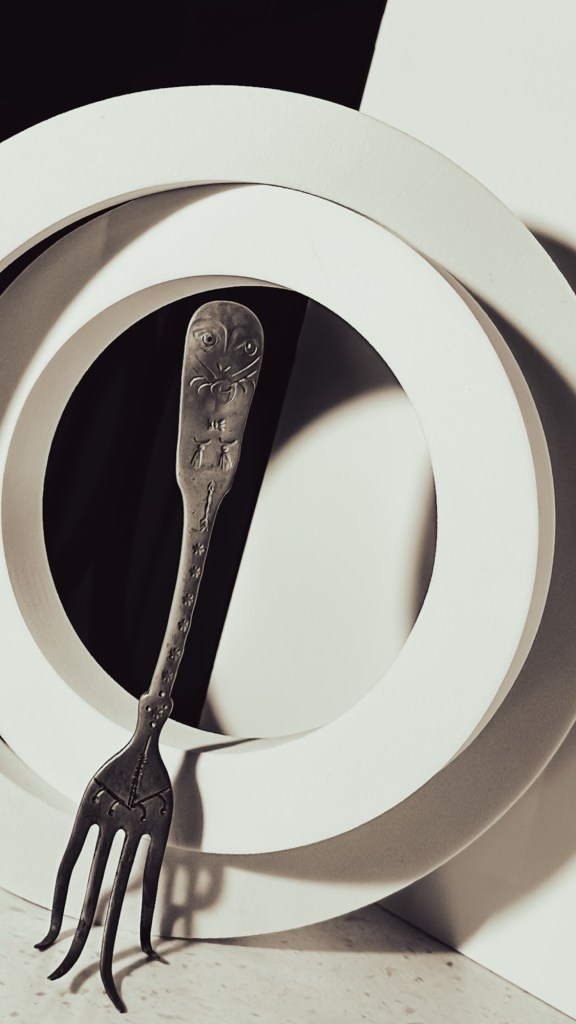
In the quiet clatter of a dining room, there is laughter and stories. Amid steaming plates, the fork sits silently. It is humble, metallic, and often overlooked. Yet, in its simplicity, the fork is one of the most profound symbols of modern human life.
At its core, the fork symbolizes choice. Unlike the spoon, which gathers, or the knife, which divides, the fork pierces and selects. It asks us: What will you take? What will you leave behind? In every meal, it becomes an instrument of intention. Each bite is a small decision, a quiet moment of will.
The fork also symbolizes separation and unity. It divides food into portions small enough to be savored. In doing so, it allows us to share a meal in harmony. In this way, it echoes society itself—individual tines working together toward a common purpose.
Socially, the fork is a bridge. Across cultures and classes, it acts as an unspoken agreement—a commitment to engage, to join in, to be there. The use of a fork can signify inclusion or exclusion, formality or intimacy. In some settings, not knowing how to use a fork “properly” becomes a subtle barrier. In others, discarding the fork is an act of rebellion, a return to the primal and unfiltered.
Philosophers have long pondered the mundane as a path to the profound, and the fork is no exception. It invites us to consider ritual, restraint, and refinement. It holds a place not only at the table, but in the very architecture of social life.
So next time you sit down to eat, notice the fork. It does not speak, but it says something. In its shape, there is structure. In its silence, there is meaning.
 11:eleven Photography
Leave a comment